Private jet from Phoenix to Hawaii
Deer Valley is the usual Phoenix departure point for Hawaii. A heavy jet reaches Maui in 5h 49m nonstop from Phoenix. Light jets need a fuel stop on that route.
- Home
- Phoenix
- 1airport
- 1priced routes
- $27,000–$41,000Phoenix → Maui, light jet
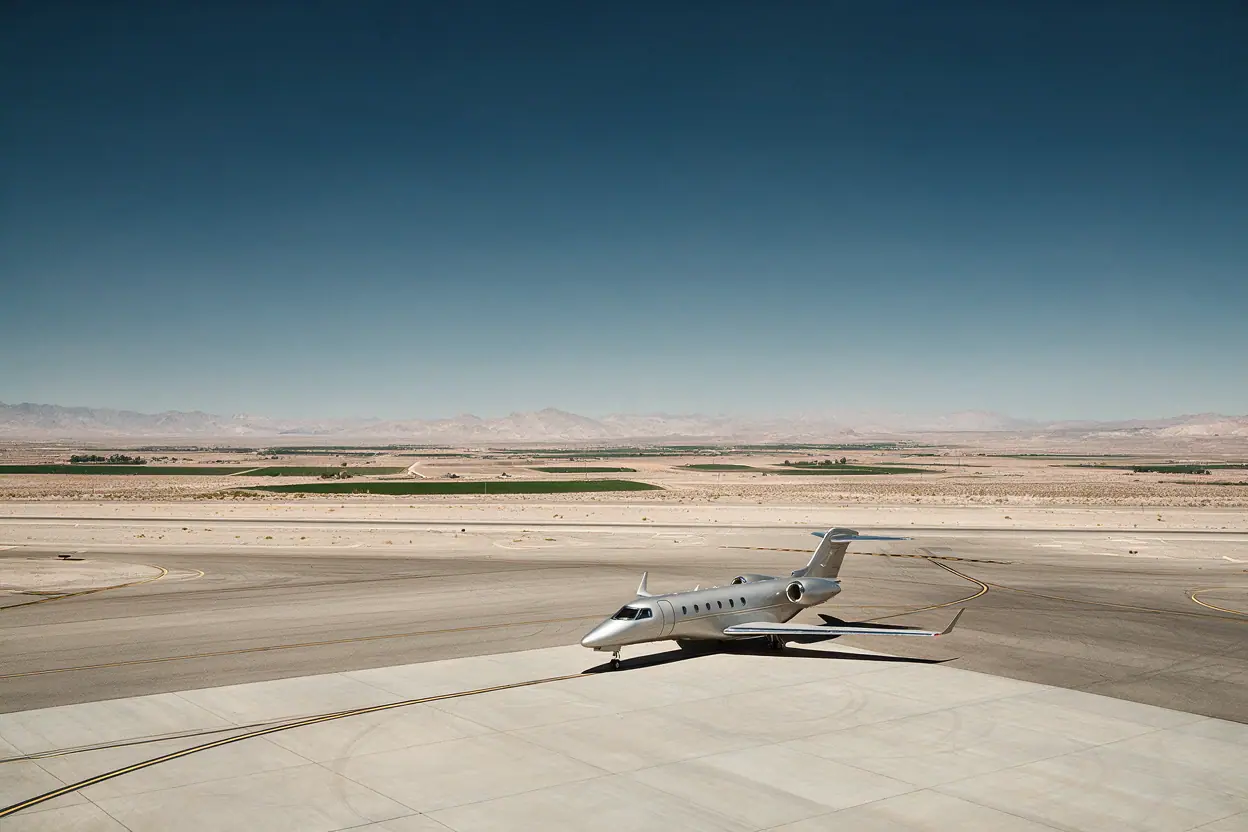
Phoenix sits farther from Hawaii than Los Angeles or San Francisco, so range stops matter. The nonstop distance from Phoenix to Maui is 2,467 nautical miles, which is beyond the reach of most light and midsize jets. A light jet with 1,400 nautical miles of range cannot do that leg nonstop, and a midsize jet with 2,100 nautical miles cannot either. Only super-midsize aircraft (3,200 nautical miles) and heavy jets (4,000 nautical miles) cover Phoenix to Maui without a fuel stop. That single fact changes the aircraft list and the price more than anything else on this route.
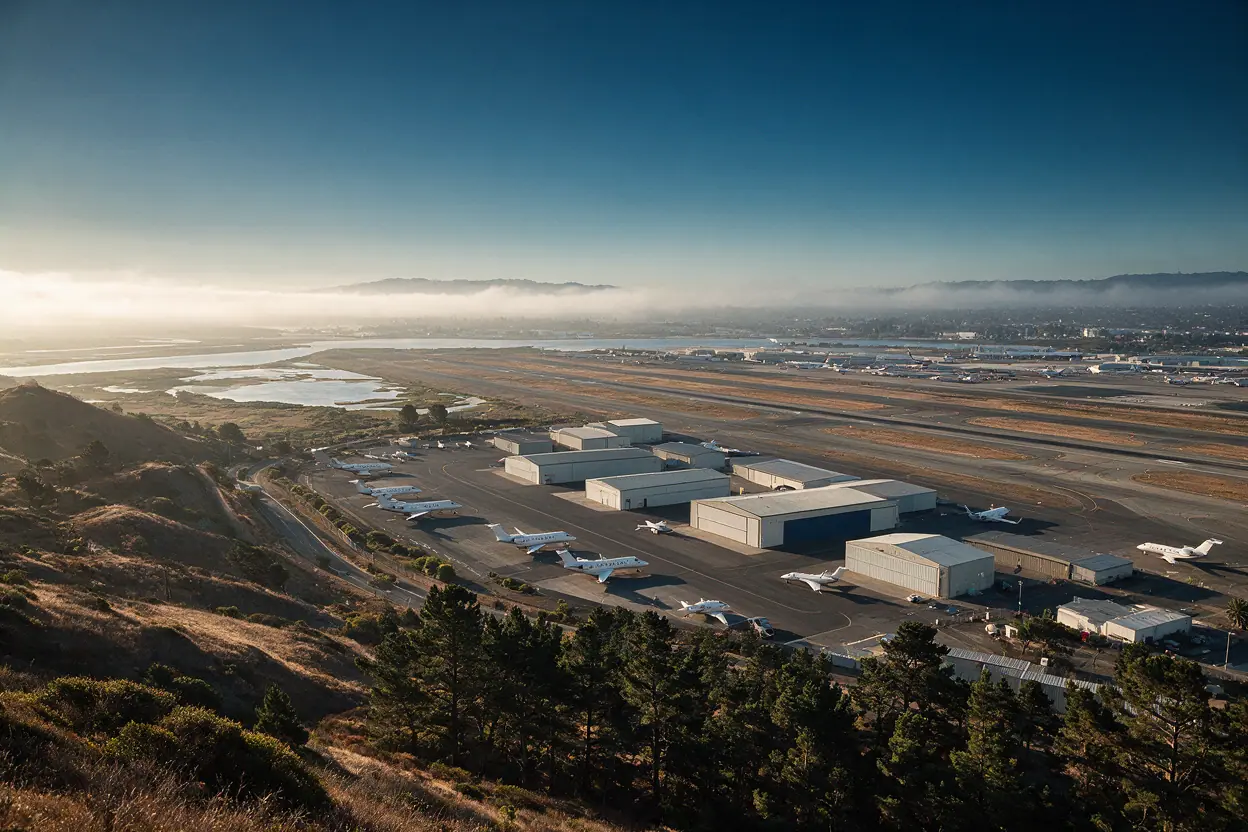
Deer Valley Airport is the usual departure point for Phoenix charters to Hawaii. It sits at 1,478 feet elevation with an 8,196-foot runway, and summer heat pushes density altitude higher. In July, density altitude there reaches about 4,900 feet, and at 115F it climbs to roughly 5,400 feet. High density altitude reduces takeoff performance, so a heavy jet carrying full fuel and a full cabin may face payload limits. If your group is large and the forecast is hot, then a cooler morning departure or a different aircraft can matter. Charter operators calculate this before they quote.
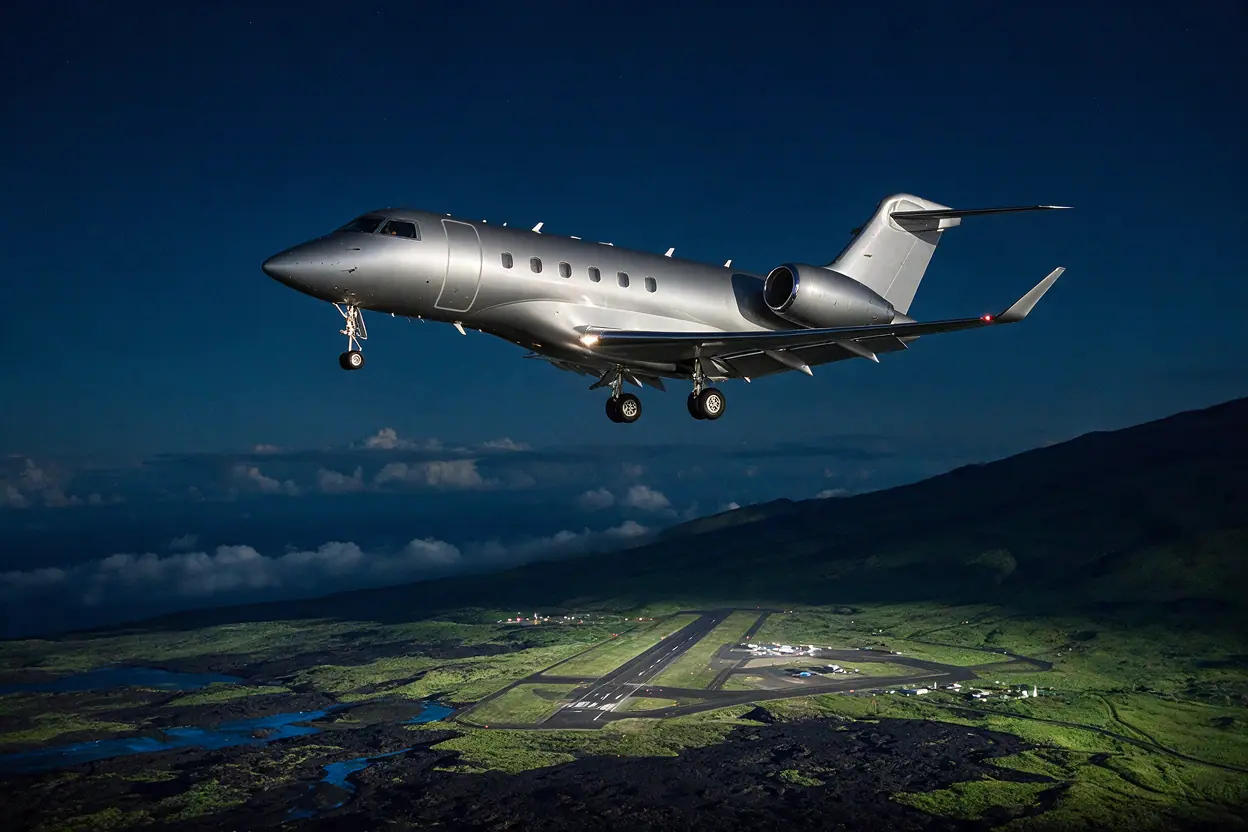
The trade-off on Phoenix to Hawaii flights is time against range against cabin size. A light jet keeps the hourly rate low, but the fuel stop adds time and a landing fee. A heavy jet flies nonstop with 10-14 passengers and a stand-up cabin, at a higher hourly rate. Midsize and super-midsize jets sit between those extremes. Availability depends on what is based in Phoenix versus what has to be ferried in empty, which adds to the cost. Call early for holiday weeks and summer.
Airports serving Phoenix
Private jet from Phoenix to Hawaii
Start with the range question
Ask whether the aircraft can fly Phoenix to Maui nonstop. If the answer is no, then the quote must include a fuel stop, extra time, and landing fees. A super-midsize or heavy jet avoids the stop.
Match aircraft to group size
Light jets seat 4-7, midsize 7-9, super-midsize 8-10, and heavy jets 10-14. A group of eight on a hot July afternoon is a different aircraft problem than the same group in January.
Confirm the operator holds operational control
As a DOT Part 295 broker, we act as your agent and arrange flights with FAA Part 135 operators who hold operational control. Ask who the operator is and confirm their certificate covers the route.
Plan for CBP and customs
Hawaii arrivals require CBP clearance. The operator files the manifest and arrival details in advance, so give yourself buffer on the arrival end.
What a Phoenix to Hawaii charter costs
Maui is the benchmark route from Phoenix. A light jet covers the 2,467 nautical miles in 7h 04m with a fuel stop, and a heavy jet makes it in 5h 49m nonstop. Hourly rates run from $3,800 to $5,800 for light jets, $5,200 to $7,800 for midsize, $7,200 to $10,000 for super-midsize, and $9,500 to $14,500 for heavy jets. Those are estimates, and the final quote depends on the aircraft, crew duty time, fuel, landing and handling fees, and whether the jet has to be repositioned. A rough planning figure for a heavy jet on this route is on the order of $27,000 and up, but treat it as a starting point, not a firm price. Ask for an itemized estimate so you can see what changes the number.
| Route | Light jet | Midsize | Heavy |
|---|---|---|---|
| Phoenix → Maui | $27,000–$41,000 | $36,000–$54,000 | $55,000–$84,500 |
Why Phoenix departures are different
Phoenix is a desert departure, and that shapes the flight. Summer temperatures routinely pass 100F, and the density altitude at Deer Valley climbs with them. A heavy jet with a full fuel load and a full cabin may need a payload trade-off on the hottest afternoons. Phoenix also has a busy general aviation scene, so FBO ramp space and slot timing can affect your departure window. If you are flying to Hawaii during a peak travel week, then book earlier, because the aircraft that can make the nonstop leg are fewer and get taken first.
| Month | Avg high | Wet days |
|---|---|---|
| Jan | 64°F | 5 |
| Feb | 69°F | 4 |
| Mar | 75°F | 4 |
| Apr | 85°F | 1 |
| May | 92°F | 1 |
| Jun | 103°F | 1 |
| Jul | 105°F | 4 |
| Aug | 103°F | 4 |
| Sep | 98°F | 3 |
| Oct | 88°F | 2 |
| Nov | 75°F | 2 |
| Dec | 66°F | 5 |
Estimate a trip
Select a route, passengers and bags to view the fitting class, flight time and a price range.
Questions
Can a light jet fly a private jet from Phoenix to Hawaii nonstop?
No. The Phoenix to Maui distance is 2,467 nautical miles, while a light jet has about 1,400 nautical miles of range. The flight takes 7h 04m with a fuel stop. If you want nonstop, then you need a super-midsize jet (3,200 nautical miles) or a heavy jet (4,000 nautical miles).
How long is the flight from Phoenix to Maui by private jet?
A heavy jet takes 5h 49m nonstop, while a light jet takes 7h 04m with a fuel stop. The difference is mostly the stop itself plus the slower cruise speed. A midsize jet takes 6h 56m with a stop. Ask the operator for block time, which includes taxi and climb.
What does a private jet from Phoenix to Hawaii cost?
Hourly rates run from $3,800 to $5,800 for light jets and $9,500 to $14,500 for heavy jets. On the 2,467-nautical-mile Maui route, a heavy jet estimate starts around $27,000 and up. Treat any figure as an estimate until the operator confirms aircraft, crew, and fees.
Which Phoenix airport do Hawaii charters use?
Deer Valley Airport (KDVT) is the usual departure point, with an 8,196-foot runway and 1,478 feet of elevation. In July, density altitude reaches about 4,900 feet, and at 115F it reaches roughly 5,400 feet. Those conditions can limit payload on a heavy jet, so the operator checks them before quoting.
Do I need customs to fly private from Phoenix to Hawaii?
Yes. Hawaii arrivals clear US Customs and Border Protection, and the operator files the manifest and arrival details in advance. TSA screening at a private terminal works differently than at a commercial one, but the operator still verifies passenger identity. Build time into your arrival plan for the clearance step.
Who is responsible for the flight if I book through a broker?
The FAA Part 135 operator holds operational control and is responsible for the flight. As a DOT Part 295 broker, we act as your agent and arrange the charter. We do not own aircraft. Ask for the operator name and certificate before you book, and confirm the aircraft type matches your route.