Private jet Daniel K. Inouye charter
Private jet Daniel K. Inouye arrivals land at 13 feet above sea level, steps from the curb. HNL pairs that with a 12,360-foot runway and three FBOs on the field. The real variables are heat, ramp space, and how your crew plans the Pacific crossing.
- PHNL · HNLairport codes
- 13 ftfield elevation
- 12,360 ftlongest runway
- 0 mito Los Angeles
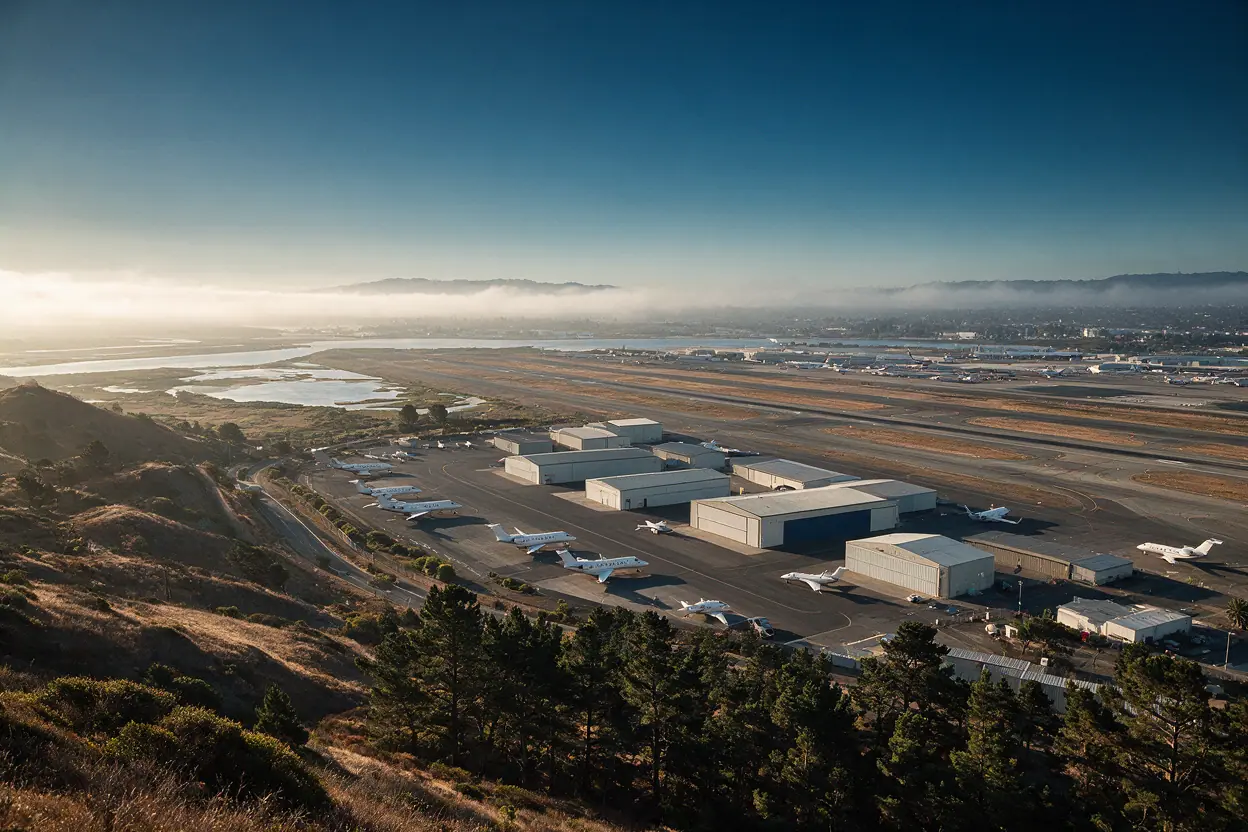
A private jet Daniel K. Inouye arrival is the standard Honolulu finish for West Coast charter flights, and for good reason. The field sits at 13 feet of elevation, so the approach and rollout are undramatic even after a long overwater leg. The main runway is 12,360 feet of asphalt, long enough that a mid-size or large-cabin jet has room to spare on landing. From the Los Angeles basin, the trip is roughly 2,759 miles to Daniel K. Inouye, and that distance is what drives the aircraft category you end up booking.
For a private jet charter flight to Hawaii from the West Coast, the practical question is not runway length but fuel and crew duty. A light jet will not make it nonstop with a comfortable reserve. Turboprops are out entirely. That leaves super-mids, large-cabin jets and a handful of long-range aircraft, and on the Honolulu route the difference between them shows up in cabin comfort over five-plus hours and in how much baggage you can bring. Ask your broker which specific aircraft type is being quoted, not just the category.
It helps to know that this is a broker's job, not an operator's. We arrange the trip; the flying is done by FAA Part 135 operators who hold operational control and their own certificates, and the broker side is disclosed under DOT Part 295. On an international itinerary, CBP handles clearance and the operator files the manifest. Booked well ahead, you get the pick of aircraft based on the West Coast; booked late, you get what is repositioning.
The airport itself is on the western edge of Honolulu, minutes from downtown and the Waikiki hotel strip. That short ground transfer is one of the reasons travelers who could use other island airports still default to HNL for business and resort trips. If your final destination is Maui or the Big Island, HNL becomes a technical stop and you are usually better off flying straight to Kahului or Kona instead.
Field conditions at Daniel K. Inouye
The main runway at Daniel K. Inouye runs 12,360 feet, and at 13 feet of elevation the field is about as forgiving as a runway gets for a heavy arrival. A private jet Daniel K. Inouye landing rarely faces a runway-length limit, so the constraint shifts to traffic sequencing and ramp space during busy winter and summer weeks. Trade winds are the norm, which typically means landing into a steady headwind and a shorter ground roll than the book figure suggests. Crosswind days happen, and your crew will brief for them like anywhere else.
| Runway | Run | Width | Surface |
|---|---|---|---|
| 08L/26R | 12,360 ft | 200 ft | ASPH-G |
| 08R/26L | 12,000 ft | 200 ft | ASPH-G |
| 04R/22L | 9,002 ft | 150 ft | ASPH-G |
| 04L/22R | 6,955 ft | 150 ft | ASPH-G |
FBOs on the field at Daniel K. Inouye
Three FBOs serve general aviation at HNL: Castle & Cooke Aviation, Atlantic Aviation and Signature Aviation. Choosing among the three FBOs at Daniel K. Inouye comes down to ramp space and timing, not brand loyalty, because each has its own parking limits and peak-season pressure. Your operator usually has a preference and a contract rate, and the broker should tell you which one is being used before you sign.
Ground handling at a Hawaii field is worth asking about explicitly. Ramp crews, catering and rental cars all move slower when several long-haul arrivals land within an hour of each other, and that is a realistic scenario on a Saturday in July.
What Daniel K. Inouye is best for
- Honolulu business trips where the hotel is Waikiki and the ground transfer should be measured in minutes
- West Coast departures from the Los Angeles basin, roughly 2,759 miles, using super-mid or large-cabin jets
- Winter and spring travel when mainland weather makes commercial connections unreliable
- Groups with enough baggage that a large-cabin aircraft makes more sense than a light jet with a fuel stop
| Class | Typical runway need | Here |
|---|---|---|
| Turboprop | 3,300 ft+ | Fits |
| Light jet | 4,000 ft+ | Fits |
| Midsize jet | 5,000 ft+ | Fits |
| Super-midsize jet | 5,200 ft+ | Fits |
| Heavy jet | 5,600 ft+ | Fits |
Heat and density altitude at Daniel K.
Density altitude at HNL peaks around 2,800 feet on the hottest afternoons, well below the field's true elevation problem threshold but high enough that crews watch takeoff performance on departure. In July the density altitude sits near 2,200 feet, so a Daniel K. Inouye departure with full fuel still needs a performance check, especially for a heavy long-range jet heading east. August runs slightly hotter at 2,300 feet.
Rainfall is modest and mostly a winter matter, with five wet days typical in January and December and none in June or July. Temperatures swing from highs near 65 in January to 93 in August. If you are flying the reverse direction, remember that the westbound leg is the long one and the departure performance at HNL matters more than the arrival.
| Month | Avg high | Wet days | Density altitude |
|---|---|---|---|
| Jan | 65°F | 5 | 400 ft |
| Feb | 68°F | 5 | 600 ft |
| Mar | 69°F | 7 | 700 ft |
| Apr | 76°F | 3 | 1,100 ft |
| May | 77°F | 2 | 1,200 ft |
| Jun | 85°F | 0 | 1,700 ft |
| Jul | 92°F | 0 | 2,200 ft |
| Aug | 93°F | 1 | 2,300 ft |
| Sep | 89°F | 2 | 2,000 ft |
| Oct | 84°F | 2 | 1,700 ft |
| Nov | 74°F | 2 | 1,000 ft |
| Dec | 66°F | 5 | 500 ft |
Getting to and from Daniel K. Inouye
HNL sits on the western side of Honolulu, a short drive from downtown and the Waikiki hotels, which is a big part of why it stays the default for Oahu arrivals. For a private jet Daniel K. Inouye transfer, the ground leg is the easy part of the day, and your FBO can arrange a car before you land. If your trip continues to another island, ask about a direct routing to Kahului or Kona rather than a repositioning stop.
Private jet routes via Daniel K. Inouye
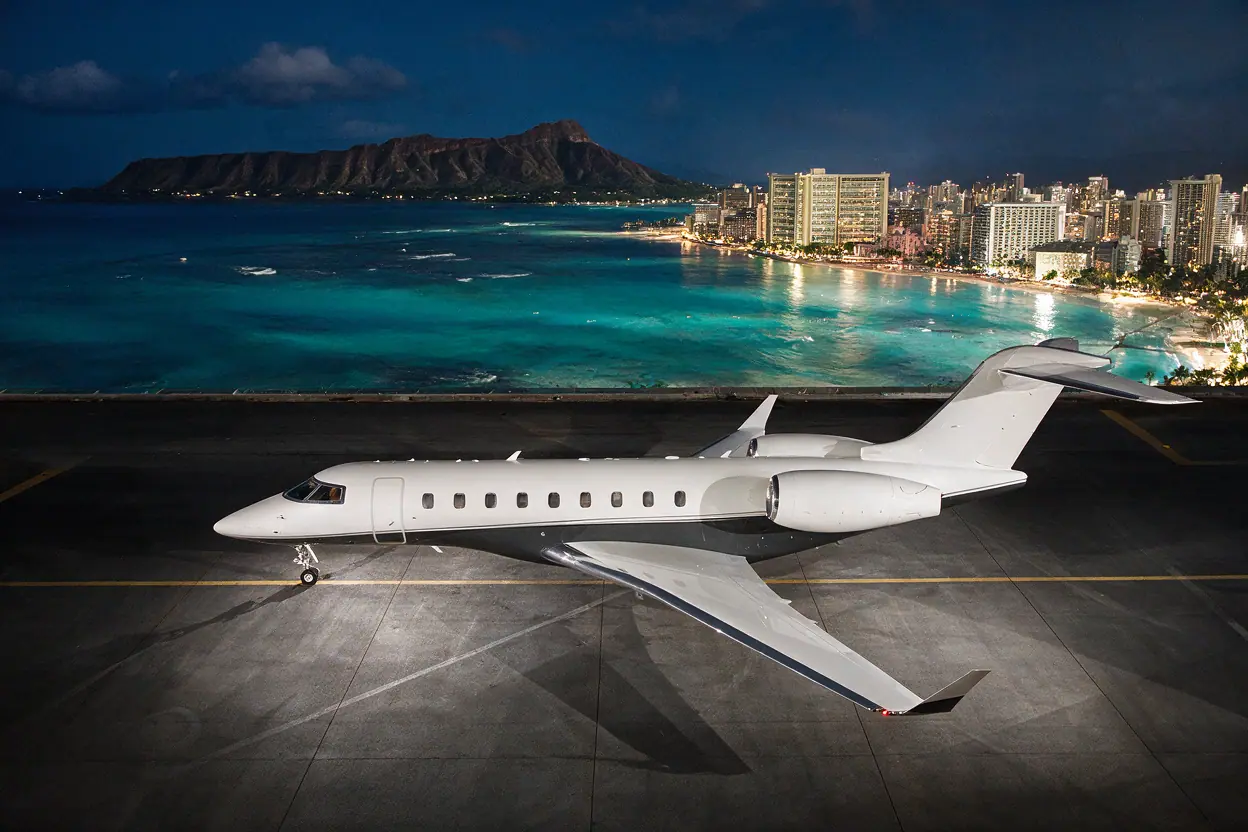
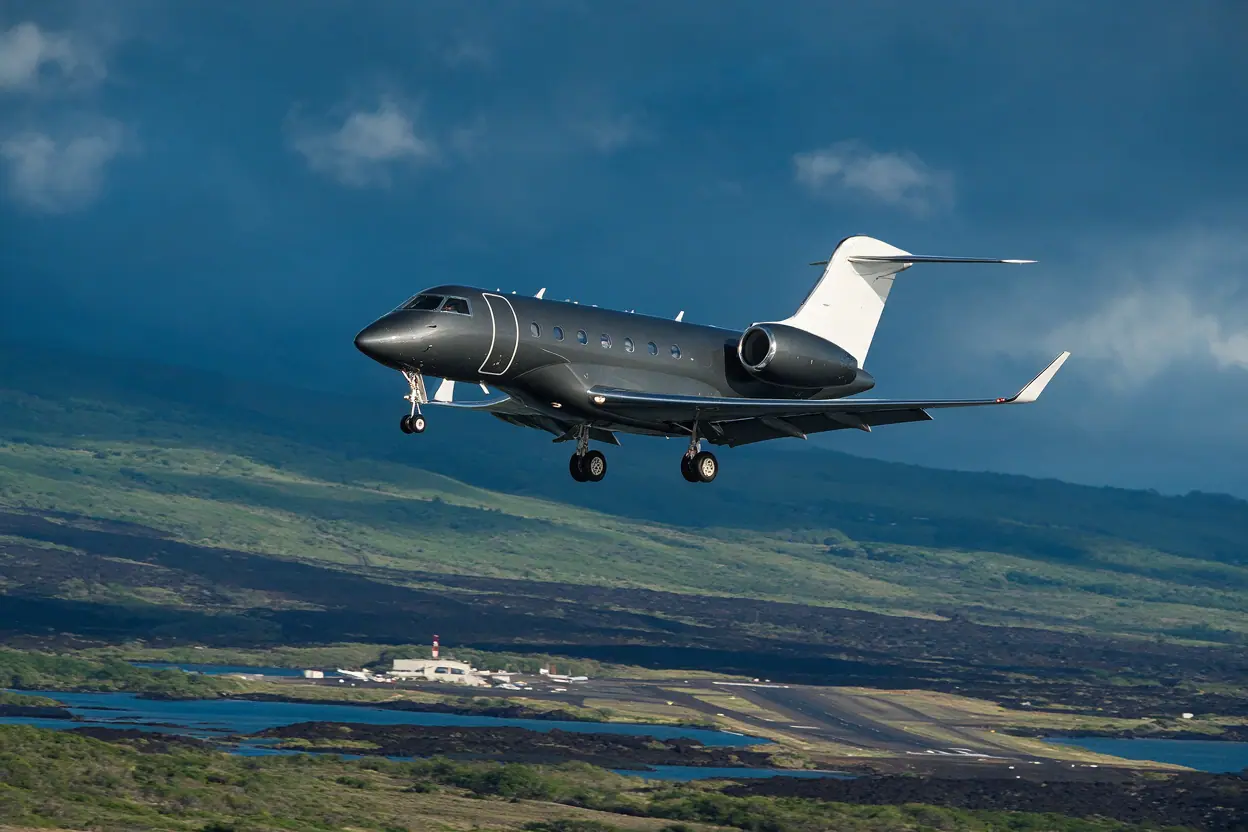
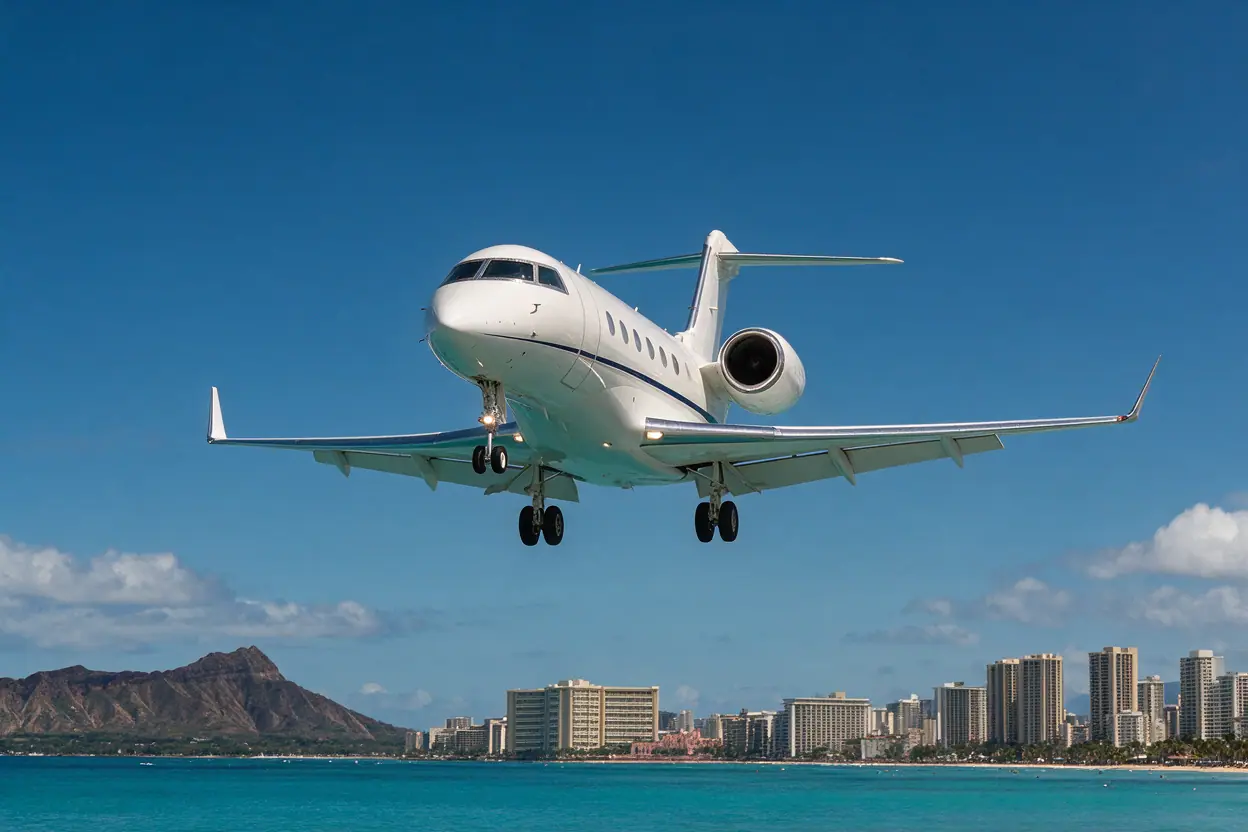
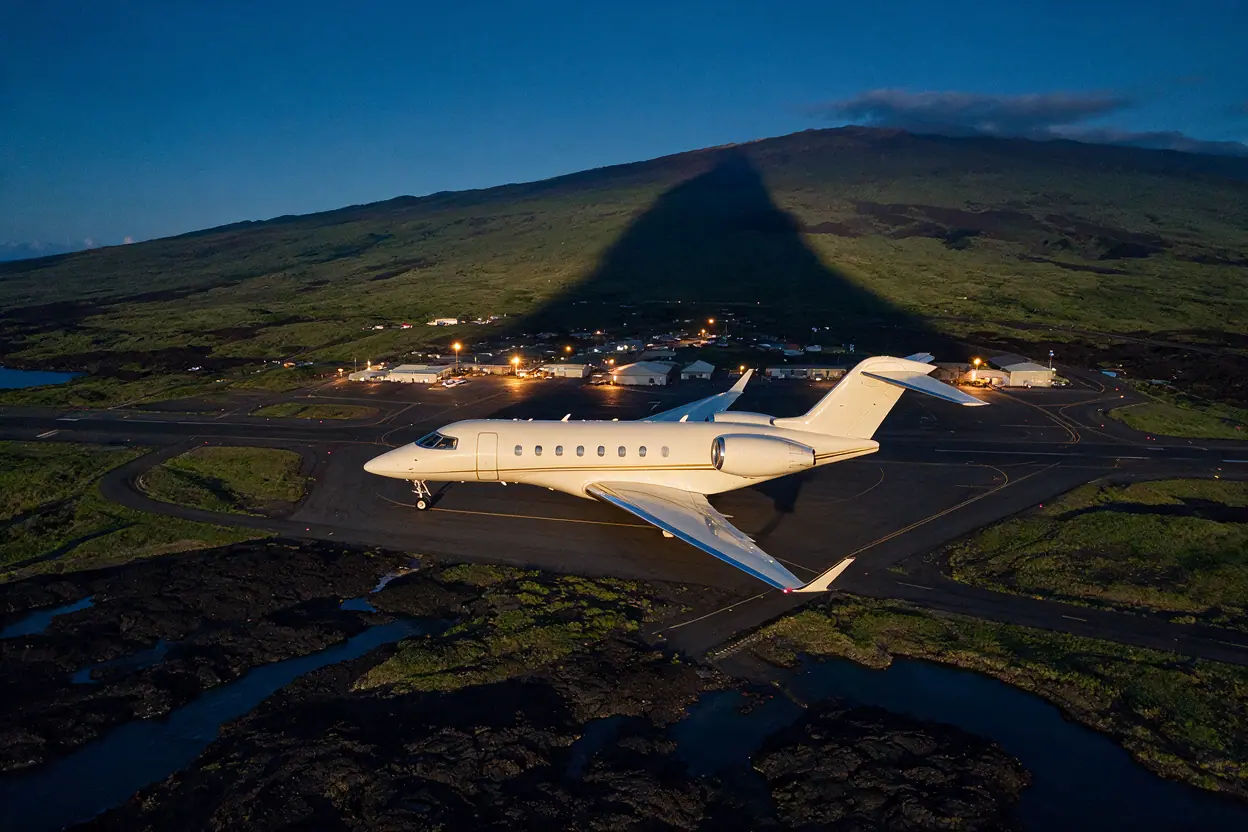
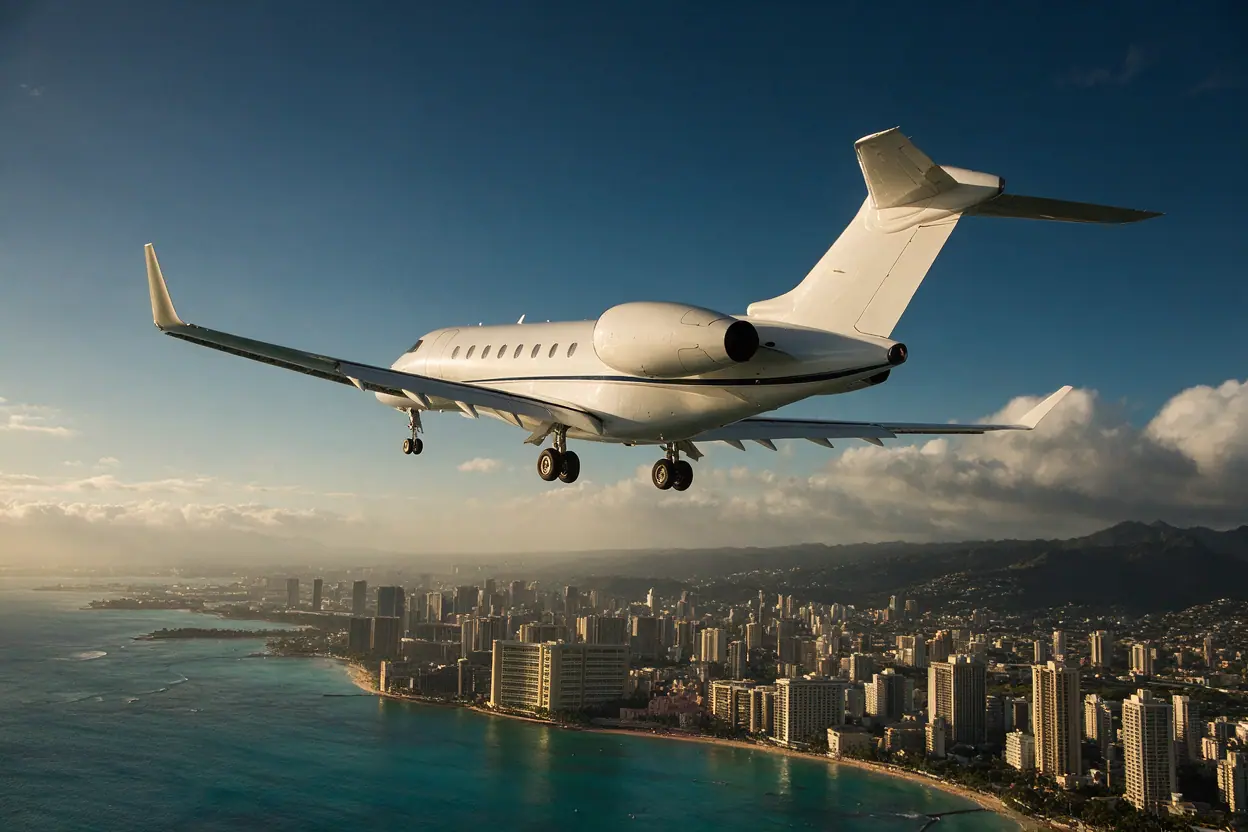
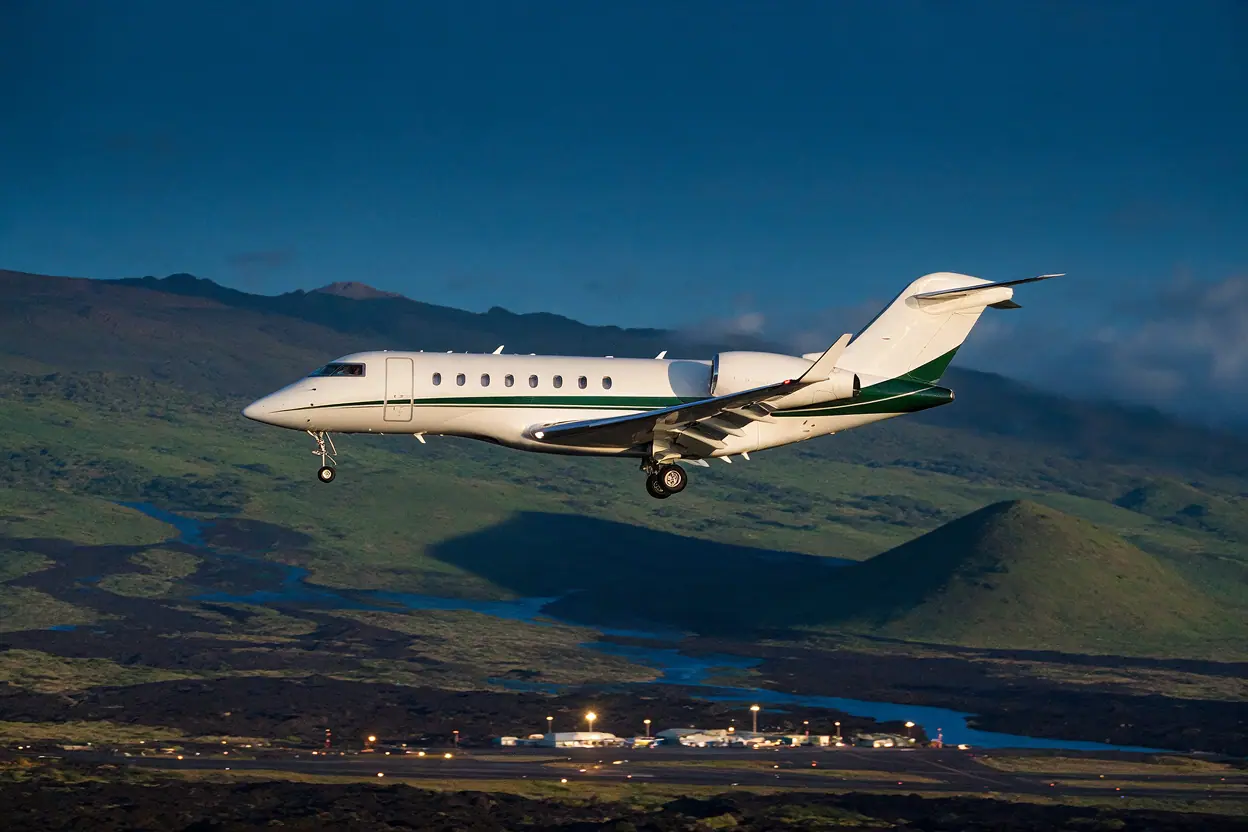
Across these 6 private jet routes, distances span 2,031 to 2,329 nautical miles, and one-way light jet estimates range from $23,000 to $39,000.
Inquiries on this airport
How far is the flight for a private jet Daniel K. Inouye arrival from Los Angeles?
About 2,759 miles from the Los Angeles basin strip to Honolulu. That distance rules out light jets and turboprops on a nonstop basis, so expect a super-mid or large-cabin aircraft. From Van Nuys the figure is similar, and from San Francisco it is shorter. Ask your broker for the specific aircraft type, not just a category, before you compare quotes.
Which FBOs can a private jet Daniel K. Inouye flight use?
Three: Castle & Cooke Aviation, Atlantic Aviation and Signature Aviation. Your operator typically has a contract rate at one of them, and the broker should confirm which before booking. In peak weeks ramp space tightens, so if your schedule is flexible, a midweek arrival gives you more handling options than a Saturday.
Does density altitude matter at HNL?
It peaks around 2,800 feet on the hottest afternoons and sits near 2,200 feet in July. That is modest for a sea-level field at 13 feet, but departure performance still gets a look for a heavy long-range jet. August is a touch hotter at 2,300 feet. Crews compute the numbers for the actual temperature and weight on the day.
How long is the runway at Daniel K. Inouye?
12,360 feet on the main runway. For arrivals, that is generous, and landing distance is rarely the limiting factor. Departures with full fuel for a long eastbound leg are where the performance discussion happens. A 12,360-foot runway gives most large-cabin jets room, but the calculation is still done per flight.
Should I book a charter to Honolulu or to Maui instead?
If your destination is Maui, fly to Kahului; it is 2,692 miles from the same West Coast strip. Kona is 2,714 miles and has an 11,000-foot runway. Stopping at HNL first only to reposition adds time and cost. Give your broker the actual final address or resort and let the routing follow from that rather than defaulting to Honolulu.
When is the best time to charter to Honolulu?
April and May are the sweet spot, with highs of 76 and 77 and very few wet days. July and August are the hottest and busiest, with density altitude near 2,200 to 2,300 feet and heavier ramp traffic. Winter brings about five wet days a month in January and December, but also the holiday demand that pushes aircraft availability down.